
Innovator Founder Visa for Innovative Founders No Business Experience Needed
- IWHUKLTD

- 2 days ago
- 9 min read
“This visa must be only for business experts.”
That belief stops many good founders before they even begin. They assume they need a long business career, previous company ownership, investor contacts, or years of management experience to be taken seriously.

The reality is different.
The UK does not look only for experienced businesspeople. It looks for founders who can bring a fresh, scalable business idea and prove they understand how to build it. A student with a strong solution can be a serious applicant. A working professional with no previous company can also be a serious applicant. Even someone changing careers can explore this route, if the idea and execution plan are strong enough.
The Innovator Founder Visa is not about looking impressive on paper. It is about showing that the business has potential, that the founder understands the problem, and that the plan can work in the UK market.
That means the most important thing is not just the idea. It is clarity.
What problem are you solving? Who will pay for the solution? Why is the business different? How will it grow? What will you do in the first few months? These answers matter because endorsement is not given to a dream. It is given to a business proposal that looks new, viable, and scalable.
This post is for anyone who has been thinking, “I have an idea, but I do not have business experience.” That alone should not make you reject yourself.
This article is for general information only and should not be treated as immigration or legal advice.
Business experience is useful, but it is not the main requirement
Many people confuse business experience with business readiness. They are not the same thing.
Business experience can help. If someone has already run a company, managed staff, handled sales, built products, or raised funds, they may find parts of the process more familiar. But experience alone does not make a weak idea strong.
At the same time, no previous business ownership does not make a strong idea weak.
A founder may come from another background and still understand the problem deeply. For example:
A healthcare employee may spot a gap in patient booking or care coordination.
A graduate may build a tool that solves a problem faced by international students.
A software developer may create a better way for small firms to manage compliance.
A supply chain professional may see a smarter process for reducing waste.
A teacher may design a learning platform for a specific group of learners.
In these cases, the founder may not have run a company before. Yet they may have strong insight into a real problem. That insight can be more valuable than general business experience.
The UK’s Innovator Founder route focuses on the business idea and the founder’s ability to carry it forward. The idea must usually be:
New
It should not simply copy a business already trading in the UK.
Viable
It should have a realistic plan, target customers, and a route to revenue.
Scalable
It should be capable of growth beyond a small, one-person local service.
These are not abstract words. They are the basic test of whether the idea can become a serious business.
A person with no business background can still meet these standards if they prepare properly. A person with years of business experience can fail if the idea is unclear, ordinary, or poorly planned.
The real question is whether the business makes sense
A good idea is not enough. Many ideas sound exciting in conversation but fall apart when basic questions are asked.
For an Innovator Founder Visa application, the business needs to make sense on paper and in discussion. The endorsing body must be able to see how the idea could work in the real world.
That usually means answering practical questions such as:
What exact problem are you solving?
Who has this problem?
How serious is the problem?
What are people currently using instead?
Why is your solution better?
How will you make money?
How will you reach customers?
What will you build first?
What will the business look like after one year?
What skills do you have, and what support will you need?
These questions are not designed to catch people out. They are there to test whether the founder has thought beyond the headline idea.
For example, “I want to launch an app for students” is too broad. It does not explain the problem, the user, or why the app is needed.
A clearer version would be more specific:
“I want to build a platform that helps international students compare verified short-term accommodation near university towns, because many arrive before securing housing and face high deposits, scams, or unsuitable tenancy terms.”
This is still only a starting point, but it is stronger because it identifies a real user, a real pain point, and a market need.
Then the founder must go further. How will the platform earn revenue? Will it charge accommodation providers, students, universities, or partners? What checks will make listings safer? Which city or group will be tested first? What makes the model scalable across the UK?
That level of thinking gives the idea structure.
Endorsement is not based on passion alone. Passion helps, but it cannot replace a clear business model. The endorsing body wants to see business potential, not just excitement.
Students and working professionals can be strong candidates
This route is often misunderstood because the word “founder” sounds intimidating. Some people hear it and imagine someone who already owns a company, has raised investment, or speaks in business terms all day.
In reality, many strong founders begin as students, employees, researchers, freelancers, or specialists in a field. They notice a problem because they live close to it.
A student may understand a gap in education, housing, payments, career access, or student wellbeing. A working professional may understand a problem inside an industry, such as logistics, compliance, training, food systems, property, finance, or health technology.
The key is not the job title. The key is the quality of insight.
Students may bring:
Fresh understanding of user behaviour
Strong research skills
Access to university networks
Technical or academic knowledge
A clear view of problems faced by younger or international users
Working professionals may bring:
Industry experience
Customer understanding
Practical knowledge of inefficient processes
Specialist skills
Contacts in the sector
Both groups can build serious businesses.
The challenge is usually not ability. It is communication. Many potential founders know the problem well but struggle to explain it in a business format. They may speak emotionally about the idea but not clearly about revenue, market size, customer behaviour, or growth.
That is where preparation matters.
A founder needs to move from “I think this is a good idea” to “Here is the problem, here is the evidence, here is the customer, here is the solution, and here is how the business can grow.”
That shift makes the proposal stronger.
Clarity matters more than complicated business language
Some applicants think they need to use heavy business language to sound credible. They fill their plan with large claims, vague market terms, and polished phrases. This often creates the opposite effect.
A strong business plan should be easy to understand.
If the problem is real, explain it plainly. If the solution is useful, describe it clearly. If the revenue model works, show how money comes in. If the business can grow, explain what growth looks like step by step.
Complex language cannot hide weak thinking. Simple language can reveal strong thinking.
A clear plan usually covers these areas.
The problem must be specific
A vague problem creates a vague business.
“People need better financial tools” is too wide. Which people? What type of financial tool? What is broken about the current options?
A stronger problem might focus on self-employed workers who struggle to predict tax, manage irregular income, or separate business and personal spending. That gives the business a sharper direction.
The customer must be clear
A business cannot serve everyone at the start. It needs a first customer group.
For example, a founder may target independent restaurants, care homes, student landlords, small legal firms, online tutors, or overseas graduates. A defined customer group helps the endorsing body understand the market.
The revenue model must be believable
A business idea needs a path to income. It does not need to be profitable from day one, but the plan must show how revenue can happen.
Common models include subscriptions, transaction fees, licensing, service fees, product sales, or business-to-business contracts. The right model depends on the idea.
The main point is that revenue should connect naturally to the customer and the value being provided.
The growth plan must be realistic
Scalable does not mean claiming the business will become global overnight. It means the model can grow in a planned way.
A strong growth plan may start with one UK city, one user group, or one sector. Then it can expand once the product, operations, and customer demand are proven.
Clear growth stages are better than inflated promises.
Endorsement is about potential, preparation, and fit
The endorsement stage is central to this visa route. Before applying for the visa itself, a founder usually needs endorsement from an approved endorsing body. That body assesses whether the business idea meets the required standards.
This is where many applicants underestimate the process.
They think the idea alone will carry the application. It usually will not. The endorsing body needs confidence that the founder understands the business and can take it forward.
A strong endorsement case often includes:
A clear business plan
Evidence of market research
A defined customer group
A realistic financial plan
A strong explanation of what makes the idea different
A practical launch and growth strategy
A founder profile that connects skills to the business
A clear answer on why the UK is the right place to build it
No business experience can be managed if the founder shows learning, preparation, and relevant ability. For example, a founder may not have run a company before but may have technical skills, industry knowledge, research experience, or a strong support network.
The endorsing body is not only asking, “Have you done this before?” It is also asking, “Can this person realistically build this business?”
That is a different question.
A new founder can answer it well by showing preparation.
For example, they can show that they have spoken to potential customers, studied competitors, tested a basic version of the product, researched pricing, mapped costs, and built a plan for the first stage of trading.
These actions show seriousness.
What a founder should prepare before applying
Before rushing into the process, it helps to organise the idea properly. This saves time and reduces confusion later.
Start with the problem. Write it in one or two clear sentences. Avoid broad claims. Make it specific enough that someone can understand who is affected and why it matters.
Then define the customer. Do not say “everyone”. Pick the group most likely to buy first.
Next, explain the solution. Keep it practical. What will the product or service actually do? How will the customer use it? What result will it create?
After that, work on the business model. Explain how the business will earn money. Include pricing logic where possible, without guessing wildly.
Then look at competitors. Every business has alternatives. Even if no one offers the same solution, customers are already doing something to handle the problem. Explain why your approach is better or different.
Build a simple launch plan. What happens in the first three to six months? What needs to be built? Who needs to be contacted? What early results would show progress?
Think about your own role. Why are you the right person to build this? The answer does not need to be “because I have owned three companies.” It could be because you understand the problem, have technical skills, have worked in the sector, have researched the market, or have already started testing the idea.
Also check the wider visa requirements. The business idea is central, but applicants must still meet immigration requirements set by UK Visas and Immigration. These can include identity, English language, suitability, funds where required, and other conditions linked to the route.
Many successful founders started without business experience
It is easy to look at successful founders after they have built something and assume they were always business experts. Most were not.
Many started with a problem they understood. Then they learned sales, finance, hiring, operations, product development, and customer service while building. Business knowledge often grows through action.
That does not mean preparation is optional. It means lack of previous business ownership should not become a reason to stop.
A first-time founder must be honest about gaps. If finance is weak, get help with numbers. If market research is thin, speak to users. If the growth plan is vague, break it into stages. If the pitch sounds confusing, simplify it.
The goal is not to pretend to be experienced. The goal is to show that the business is well thought out and that the founder can learn, adapt, and execute.
That is what makes the proposal stronger.
The Innovator Founder Visa for Innovative Founders No Business Experience Needed is not a promise that every idea will qualify. It means previous business ownership is not the only path. A new founder with a strong, scalable idea and a clear plan may have a real chance.
The first step is not to reject yourself. The first step is to test the idea properly.
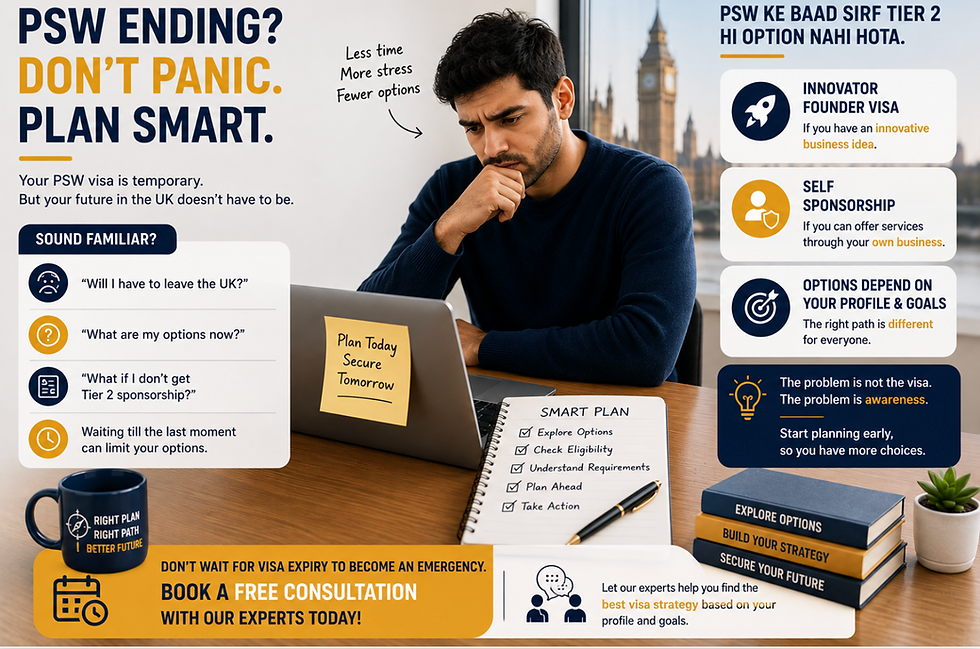
If you have a business idea and are unsure whether it is suitable for the Innovator Founder route, book a free consultation with our experts. A clear conversation can help you understand the strength of your idea, the gaps in your plan, and the next steps before you move forward.


Comments